Wine Body Explained: What Light, Medium and Full Mean
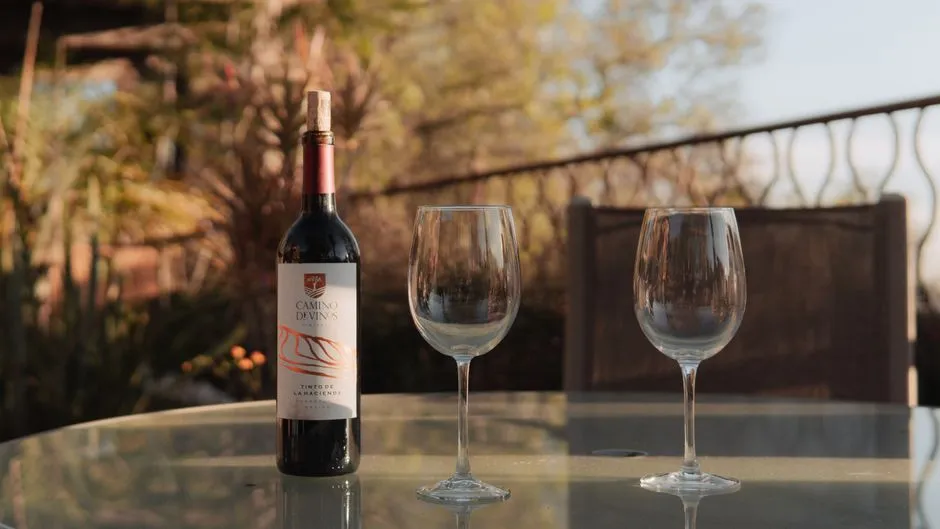
What is wine body?
Wine body is the perceived weight of a wine in your mouth: how thin, round or mouth-filling it feels as you hold it and swallow. A light-bodied wine feels closer to water, a full-bodied wine feels denser and richer, and medium sits between them. Body is not one measurement. It is an overall impression built mostly from alcohol, sugar, extract and tannin, nudged by acidity and serving temperature, and on its own it says nothing about quality.
The Wine & Spirit Education Trust (WSET), a wine-education organisation that teaches a structured tasting method on its courses, describes it the same way. Its guide to mouthfeel calls body "really a mixture of a number of these elements, which we then interpret as body," and offers a calibration anyone can try: think of plain water against a creamy milkshake. One is thin; the other has weight. Wine lives somewhere along that line.
What do light, medium and full body mean?
They are points on a scale, not boxes with hard edges. The WSET Level 2 Systematic Approach to Tasting Wine, the structured tasting sheet for that course, gives three options for body: light, medium and full. The Level 3 version widens the scale to five: light, medium(-), medium, medium(+) and full. The extra steps are there because a great many wines sit somewhere between the extremes.
In the glass, the three broad bands tend to feel like this:
- Light-bodied wine is brisk and slips across the palate without much lingering weight. Wine Folly's guide to body lists Pinot Noir and Gamay among light-bodied reds.
- Medium-bodied wine has clear presence without heaviness. Wine Folly places Sangiovese, Garnacha and Cabernet Franc here.
- Full-bodied wine coats the mouth and feels substantial as you swallow. Wine Folly's full-bodied reds include Syrah, Cabernet Sauvignon and Malbec, and it notes that Chardonnay is "often considered a full-bodied white wine" because it is so frequently aged in oak.
Treat grape lists as a starting point rather than a rule. The same variety can land in different places depending on where and how it was grown and made. Wine Folly's general rule is that "grapes grown in warmer climates tend to produce richer, more full-bodied wines," which is why two bottles of one grape, one from a cool region and one from a hot one, can feel like different wines. For a wider map of reds by weight and structure, see our guide to types of red wine.
What makes one wine feel heavier than another?
Several components push in the same direction, and one pulls the other way.
Alcohol
Alcohol is the most dependable lever. WSET says alcohol "contributes warmth and weight and can enhance the perception of sweetness." Research supports that, with limits. In a 2007 study of three Australian Rieslings by Gawel, Van Sluyter and Waters, summarised by UC Davis, trained judges tasted versions adjusted to 11.6, 12.6 and 13.6% alcohol by volume. Higher alcohol raised perceived hotness in all three wines, but raised perceived body and viscosity in only two of the three. Alcohol tilts the scale; it does not settle it alone.
Sugar
Residual sugar, the grape sugar left unfermented in the finished wine, adds weight. WSET describes sugar's effect on the feel of a wine as bringing "weight and roundness," and contrasts the rounded feel of an off-dry wine with the more linear feel of a bone-dry one. Wine Folly adds that residual sugar in small amounts "can add to a wine's body without necessarily making it taste sweet." Body and sweetness remain separate questions, though: a dry wine can be full-bodied, and plenty of full-bodied reds are dry.
Extract, tannin and oak
Extract is WSET's term for "the amount of colour and flavour compounds in a wine, which bring a sense of density." Its suggested exercise is direct: "Compare a low-extract Pinot Noir with a high-extract Cabernet Sauvignon." Tannin, the drying, gripping texture most noticeable in red wine, adds to the sense of structure, and oak can add more. Wine Folly notes that wines "aged in fresh oak barrels often taste more full-bodied" and sums up the heavier style as the result of "increased tannin, higher alcohol and lower acidity."
Glycerol
Glycerol is a compound produced during fermentation, and Wine Folly says it "increases the perception of wine's body." WSET is more measured, saying it "may contribute slightly to the wine's texture and sense of fullness." In the Riesling study, the effect of added glycerol was "less consistent, and highly wine-dependent" than the effect of alcohol. It plays a part; it is not the secret ingredient it is sometimes made out to be.
Acidity
Acidity pulls the other way. Wine Folly puts it plainly: "We humans tend to perceive wines with higher acids as tasting lighter-bodied." WSET describes acidity as bringing "a physical sensation of mouthwatering and a perception of freshness." In the Riesling panel, acidity was generally inversely associated with body, but two of the ten judges found the reverse. That split is a useful reminder that body is partly a personal reading, which is why comparing wines side by side teaches more than any definition.
Can you tell a wine's body from the label?
Partly. Alcohol by volume (ABV) is the most useful clue printed on the bottle. Wine Folly's rule of thumb is that "Wines above 14% alcohol tend to taste more full-bodied." Treat the printed number as approximate. In the United States, the Alcohol and Tobacco Tax and Trade Bureau (TTB), the federal agency that regulates alcohol labelling, permits a tolerance of "plus or minus 1.5 percentage points for wines containing 14% or less alcohol by volume" and plus or minus 1 percentage point above 14%. Its own example: a label reading 12% is permissible provided the wine's actual alcohol content does not exceed 13.5% or fall below 10.5%.
Beyond the number, read the other signals together. A warm region, new oak and a high ABV all point toward full. A cool region, no oak and modest alcohol point toward light. None of these is a guarantee on its own, and a producer's back label describing the style is often the most helpful single hint.
Does serving temperature change body?
It changes how body comes across. WSET's mouthfeel guide states that "Warmer temperatures highlight alcohol and body." Cooler service tends to bring freshness forward and quiet a wine's weight. That works in both directions: a light red can take a gentle chill and stay lively, while a full red served too warm can feel heavy and hot. Our guide to how cold wine should be gives practical starting ranges by style.
How can you taste body for yourself?
Comparison beats description. Pour two small samples side by side at a similar temperature, for example a Gamay-based Beaujolais next to a Cabernet Sauvignon or Syrah, or an unoaked white next to an oaked Chardonnay. Take a small sip of each, hold it briefly, and ignore flavour for a moment. Ask only how much the wine seems to fill your mouth and how it feels as you swallow. Then check the ABV on each label and see whether the heavier-feeling wine carries more alcohol. Spitting is a normal part of tasting, and small pours are enough. Our guide to how to taste wine sets out a full method for writing down what you notice.
Is full-bodied wine better or stronger?
Not better. Body describes style, not quality. The WSET tasting sheets record body on the palate and judge quality separately, in their conclusions, on a scale from faulty to outstanding. A light, crisp wine with a seafood supper is not a lesser choice than a heavy red; it is a different one.
Often stronger, though, and that is worth knowing. Because alcohol is a main driver of body, full-bodied wines frequently carry more of it. The National Institute on Alcohol Abuse and Alcoholism (NIAAA) defines a US standard drink as containing "about 14 grams, or about 0.6 fluid ounces, of pure alcohol," the amount in a 5-ounce glass of wine at 12% alcohol by volume. The same 5-ounce pour of a 15% wine holds 0.75 fluid ounces of alcohol, a quarter more. This guide is for adults of legal drinking age. If you choose to drink, a smaller pour of a fuller wine, water on the table and no driving afterwards are sensible defaults.
Sources
- WSET: The secret language of wine, what is mouthfeel?
- WSET Level 2 Systematic Approach to Tasting Wine (Issue 2, 2023)
- WSET Level 3 Systematic Approach to Tasting Wine (Issue 2, 2022)
- Wine Folly: What Is Wine Body and How To Taste It
- UC Davis research summary: The effects of ethanol and glycerol on the body and other sensory characteristics of Riesling wines (Gawel, Van Sluyter and Waters, 2007)
- TTB: Wine Labeling, Alcohol Content
- NIAAA: What Is A Standard Drink?