Wine Serving and Storage Guide: From Bottle to Glass
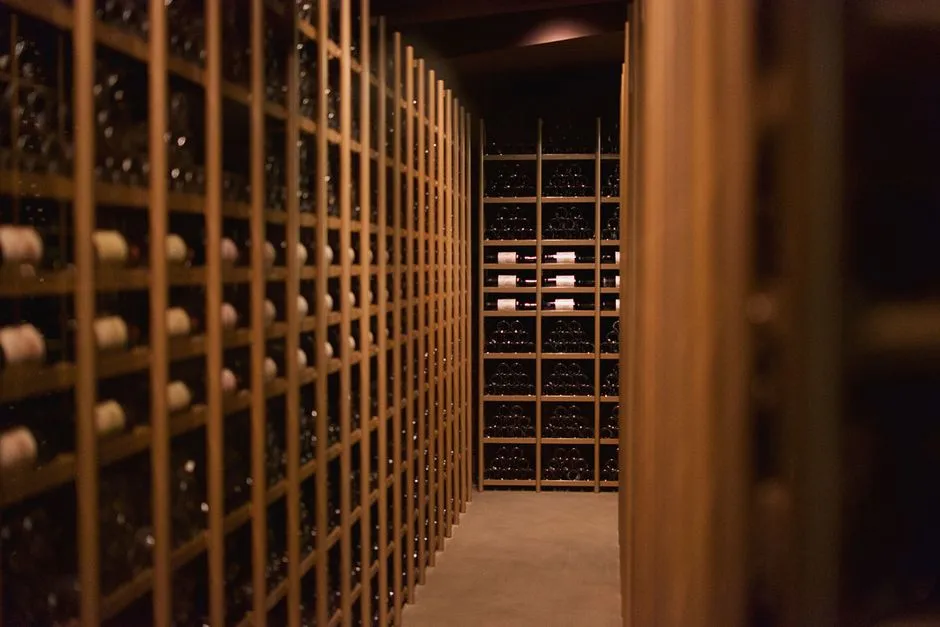
- How do you store and serve wine?
- Should you keep this bottle or open it soon?
- Where should you store wine at home?
- Is the kitchen fridge a good place to keep wine?
- How do you get wine to serving temperature?
- How do you open a bottle of still wine?
- How do you open sparkling wine safely?
- Does the wine need decanting?
- Which glass should you use?
- How much wine is a serving?
- What should you do with leftover wine?
- How should you clean up afterwards?
- Sources
How do you store and serve wine?
Store wine somewhere cool, dark, still and steady, around 10–15°C (50–59°F), with cork-sealed bottles lying down. Most bottles are made to be opened soon, so decide early whether a wine is for drinking or for keeping. To serve, bring it to the right temperature, open it carefully, decant only if there is sediment, pour into a clean glass with a generous bowl, and refrigerate any leftovers upright and closed.
The rest of this guide takes that workflow one step at a time, from the shelf to the glass to the sink.
Should you keep this bottle or open it soon?
Start with the holding horizon: how long a particular bottle is meant to wait before it is opened. For most wine, the honest answer is not long. The Wine & Spirit Education Trust (WSET), a wine-education body, notes in its serving and decanting FAQ that "the vast majority of wines produced are intended to be consumed young," and that most supermarket wine "is best enjoyed soon after purchase."
So a bottle bought for Saturday dinner needs a sensible spot for a few days, not a cellar. A bottle the producer or a trusted reference says is built to age deserves the careful conditions described below. If you do not know which kind you have, our editorial advice is to treat it as a wine to drink rather than one to keep.
Where should you store wine at home?
The aim is a place that stays cool and, above all, stays the same. WSET's guide to service and storage temperatures recommends keeping wine for ageing at a cool, constant 10–15°C (50–59°F), and steering clear of kitchens because their temperature swings so much. The same guide covers the other three conditions worth managing:
- Light. Keep bottles out of bright light, including direct sunlight and fluorescent or LED lighting, which WSET says can warm the wine and speed up unwanted chemical changes.
- Vibration. Avoid spots that shake or hum, since vibration can disturb sediment and, according to WSET, encourage chemical reactions that reduce certain acids and esters.
- Position. Lay cork-sealed bottles on their side so the cork stays moist and does not dry out, crumble or let air in. Screwcap bottles can be stored upright.
In most homes that means an interior closet or a basement corner away from the boiler, or a dedicated wine fridge if you keep enough bottles to justify one.
Is the kitchen fridge a good place to keep wine?
For a few days before serving, yes. For months, no. WSET's storage guide warns that wine kept too long in the fridge can end up with dried-out corks that let air in and make the wine stale, and that sparkling wines can lose their fizz. Use the fridge as a staging area, not an archive.
How do you get wine to serving temperature?
Serving temperature and storage temperature are different jobs. Our serving temperature guide gives the full chart by style; two practical points from WSET's temperature guide belong here.
To chill a bottle quickly, fill an ice bucket about three-quarters full with equal parts ice and water so the bottle is surrounded; ice on its own chills slowly. To warm a red that is too cold, do not put it near a radiator; WSET suggests cupping the bowl of the glass in your hands instead. A red gently warmed in the glass is better than a whole bottle cooked on a heater.
How do you open a bottle of still wine?
Screwcaps need no explanation. For corks, the tool most professionals reach for is the waiter's friend, a folding opener with a spiral, a hinged lever and a small serrated blade for the foil. WSET's guide to wine tools notes that the spiral can break fragile corks in older wines, and describes two alternatives for those bottles: the Ah-So, which slides thin metal prongs between the cork and the neck, and the Durand, which combines a spiral with prongs.
The foil blade is a cutting edge. Cut away from your hand, keep your fingers clear of the line of the cut, and fold the blade away as soon as the foil is off. Foil edges can also be sharp, so lift the cut capsule by its top rather than running a finger around the rim.
If the cork crumbles and pieces fall into the wine, the wine is not ruined. WSET's guide to wine faults says to strain them out with a coffee filter, using an unbleached one so the filter does not affect the flavour. The same guide makes a useful distinction: a "corked" wine is one tainted by a compound called TCA (trichloroanisole), not one with bits of cork floating in it, and tasting a corked wine "won't do you any actual harm," though it generally tastes unpleasant.
How do you open sparkling wine safely?
A sparkling wine bottle is a pressurised container, and a released cork is a projectile. The American Academy of Ophthalmology (AAO), the professional body for eye physicians and surgeons, warned in a release reported by ScienceDaily that Champagne bottles contain pressure "as high as 90 pounds per square inch," enough to launch a cork at 50 miles per hour, and that cork injuries can include retinal detachment, lens dislocation and damage to the bone structure of the eye. The AAO's steps are:
- Chill the bottle to 45°F (about 7°C) or colder before opening; a warm bottle's cork is more likely to pop unexpectedly.
- Do not shake the bottle.
- Point the bottle at a 45-degree angle away from yourself and anyone nearby, and keep the palm of your hand on the cork while you remove the wire hood.
- Place a towel over the entire top of the bottle and grasp the cork.
- Twist the bottle while holding the cork, and use downward pressure to counter the force of the cork as it breaks free.
If a cork strikes someone's eye, the AAO advises seeking immediate medical attention from an ophthalmologist. Do not wait to see whether it settles.
Sabrage, opening a bottle with a blade, is a separate matter. WSET's tools guide says it "should only be attempted by those with experience" and that removing the cork by hand is the safer and more practical option for most occasions.
Does the wine need decanting?
Usually not. Decanting means pouring wine from its bottle into another vessel, and it does two different jobs that are often confused.
The first job is separating wine from sediment, the deposit some wines form as they age. WSET's FAQ names the likely candidates as "vintage ports, wines capable of ageing in bottle and red wines made with little filtration," and says that sediment "will cause you no harm" but may taste bitter or astringent. Because most everyday wines are well filtered, WSET adds, "it's rare you will need to decant your wine." Its method: take the bottle horizontally from its rack and move it as little as possible, remove the top of the foil capsule, ease out the cork, then pour slowly with the bottle held in front of a light, stopping when you can see the deposit near the neck.
The second job is aeration, giving the wine air. Here WSET is candid that opinion is divided: some experts argue that prolonged air exposure makes a wine's aromas more diffuse, and that in most cases swirling in the glass is all the aeration needed. If you do decant for air, WSET recommends doing it for a short time, just before you serve.
White wines rarely throw sediment, but some form harmless crystals called tartrates. Decanting can keep them out of the glass, though they are a cosmetic issue rather than a fault.
Which glass should you use?
One good glass shape covers almost everything. WSET's starter-kit guide recommends a glass with a larger bowl as the "all-rounder," because a bigger bowl gives the wine more air contact, and notes that a thinner rim may improve how the wine is delivered. For sparkling wine, the same guide suggests a tulip shape for nearly everything from Prosecco to Champagne, and cautions against coupes because their shape lets bubbles escape quickly.
The narrow flute has a weaker case than its reputation suggests. In a WSET study of Champagne glasses involving 89 WSET Level 2 and 3 students, blindfolded tasters rated aroma intensity from the flute significantly lower than from a tulip flute, a white wine glass and a bowl. The author describes it as a single study, and the article's own conclusion is that a magic glass probably does not exist. A clean, generous white wine glass is a perfectly respectable home for Champagne.
Whatever the shape, our editorial suggestion is to fill it no more than about a third so there is room to swirl. If you want to get more from the glass once it is poured, our guide on how to taste wine walks through it.
How much wine is a serving?
A standard bottle holds 750ml. WSET's FAQ gives about 150ml (5 fl oz) as an average still-wine pour, which yields five servings per bottle, and says sparkling wine is usually poured at about 125ml. For health guidance, the US Centers for Disease Control and Prevention (CDC) defines a standard drink of wine as "5 ounces of wine with 12% alcohol," so a wine at 14% puts more alcohol into the same pour.
The CDC's moderate drinking guidance is two drinks or less in a day for men and one drink or less in a day for women, and it lists people who should not drink at all, including anyone who is pregnant or might be, anyone younger than 21, and anyone taking medications that can interact with alcohol. When pouring for guests, keep water and a non-alcoholic option on the table, and make sure nobody who has been drinking drives home.
What should you do with leftover wine?
Close it and chill it. WSET's guide to preserving opened wine says an opened bottle should be stored upright to reduce the surface area exposed to oxygen, and that cooler temperatures slow down chemical processes, including oxidation, the reaction with air that dulls a wine's fruit. By its estimate, a re-closed bottle of red or white wine in the fridge can stay relatively fresh for up to five days, and a Champagne stopper can keep sparkling wine's bubbles going for up to five days. Pouring leftovers into a smaller screwcap bottle reduces the air above the wine further.
One myth to retire: WSET says a teaspoon in the neck of the bottle "is proven to be ineffective." Our guide to how long wine lasts after opening breaks the windows down by wine type.
How should you clean up afterwards?
Rinse glasses and any decanter soon after use, before wine dries in the bottom. Rinse thoroughly so no detergent scent carries into the next pour, and let glasses dry upside down or polish them with a lint-free cloth. Hold stemmed glasses by the bowl while washing rather than twisting them by the stem.
If a glass or bottle breaks, stop and clear it fully before carrying on. Keep people and pets away, pick up large pieces with a dustpan rather than bare hands, and wrap the shards before they go in the bin. Wipe the floor with a damp paper towel to catch splinters you cannot see.
Finally, write the opening date on any bottle going back into the fridge. It is the simplest storage tool there is.
Sources
- WSET: Frequently asked questions about serving and decanting wine
- WSET: Temperatures of wine service and storage
- WSET: Wine accessories and wine openers every enthusiast should know
- WSET: Common wine faults and how to spot them
- ScienceDaily: Ophthalmologists warn flying champagne corks cause serious, blinding eye injuries each year (American Academy of Ophthalmology release, December 17, 2012)
- WSET: Gifts for wine drinkers, the perfect starter pack
- WSET: What is the best glass for champagne?
- CDC: Standard drink sizes
- CDC: About moderate alcohol use
- WSET: The best ways to keep wine fresh after opening