How to Store Unopened Wine Without Building a Cellar
- How should you store unopened wine?
- How long will the bottle be kept?
- Why does heat matter most?
- What temperature should unopened wine be kept at?
- Does light really damage wine in the bottle?
- Should wine bottles lie down or stand up?
- Does vibration or movement matter?
- Where should you store wine at home?
- Is the kitchen fridge a good place for unopened wine?
- When is a wine fridge worth buying?
- How can you tell if a bottle has been heat-damaged?
- Sources
How should you store unopened wine?
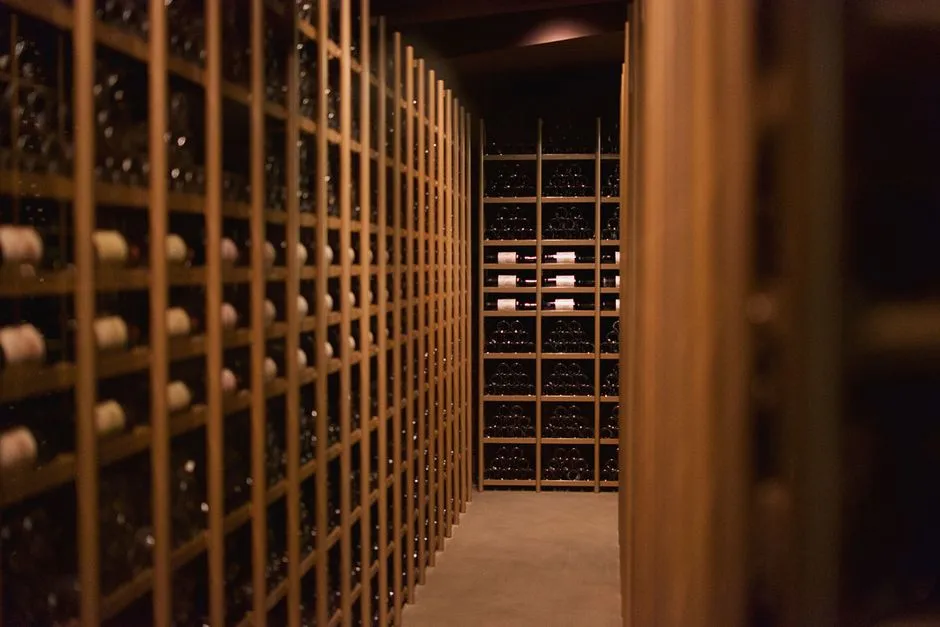
Store unopened wine somewhere dark, still and cool, where the temperature stays steady from day to night and season to season. Lay cork-sealed bottles on their side; screwcap bottles can stand. Keep wine out of the kitchen, away from sunlight and appliances. How careful you need to be depends on one question: how long will the bottle wait? A few days asks almost nothing; a year or more is where steady cool storage, or a wine fridge, earns its place.
Most bottles are not waiting long. The Wine & Spirit Education Trust (WSET), a wine-education body, says in its serving and decanting FAQ that "the vast majority of wines produced are intended to be consumed young." Our broader wine serving and storage guide covers the whole route from shelf to glass; this piece stays with the closed bottle.
How long will the bottle be kept?
Sort the bottle into one of three horizons before you choose a spot for it.
Days to a couple of weeks (short term wine storage). A bottle for Friday's dinner. Any cool, dark cupboard away from the oven will do, standing up is fine, and so is the kitchen fridge for wines you will serve cold.
A few weeks to about a year. Now the household spot matters. Choose the coolest dark place you have, lay corked bottles down, and avoid rooms that swing in temperature.
More than a year. Only worth doing for a wine its producer or a trusted reference describes as built to age. Steady temperature is the whole game here, and a cellar or wine fridge stops being a luxury.
If you are not sure which kind of wine you have, the safer editorial assumption is that it is a wine to drink, not one to keep.
Why does heat matter most?
Warmth speeds up the chemistry that ages wine, and steady warmth adds up. The Australian Wine Research Institute (AWRI), the Australian wine industry's research organisation, sets out the extremes in its technical note on heat and light during storage. One study it cites saw "faulty flavours and decreasing overall quality after 12 months' storage of wine at 30°C" (86°F). Temperatures above 40°C (104°F) "will induce visual and sensory changes to a wine in only a matter of days," and any storage place above 25°C (77°F) for long periods, or 40°C for short periods, "can affect wine quality."
Smaller differences count too, given time. In an AWRI trial reported in the Wine & Viticulture Journal, cases of the same screwcapped Cabernet Sauvignon spent 12 months either in a temperature-controlled cellar at 15.1°C (about 59°F) or in an office at 21.5°C (about 71°F). The office bottles lost more sulfur dioxide, the wine's preservative: their free SO2 was 5.1mg/L, or 22%, lower than the cellar bottles'. The authors concluded the warmer wine was likely to have "a significantly shorter shelf life", while noting it was "still in a very sound condition" and that "it would be incorrect to suggest that all wine must be stored at lower temperatures if quality is to be preserved."
So a room-temperature cupboard will not spoil next month's bottle, but a warm room will quietly shorten the life of one you hold for years.
A UC Davis study of Chardonnay points the same way: "all of the wines analyzed aged better when they were stored at 50 degrees Fahrenheit" (10°C), and "bag-in-box wine is more vulnerable to warmer storage temperatures than bottled wine." Keep boxed wine cool and treat it as a drink-soon purchase.
What temperature should unopened wine be kept at?
The commonly cited targets sit close together. WSET's storage guide asks for "10-15 °C (50-59°F)." Wine Spectator's Dr. Vinny FAQ describes ideal conditions as "a constant, humid, 55 degree-ish temperature" (about 13°C) and names temperature fluctuation as the most important thing to avoid. The AWRI note cites a recommendation of a cool 15–20°C (59–68°F) location.
Read together, they say this: around 15°C or a little below is the long-term ideal, the low 20s are tolerable for months, and a stable temperature beats a cooler one that rises and falls every day. Storage temperature is not serving temperature; for that, see our serving temperature guide.
Does light really damage wine in the bottle?
Yes, and faster than most people expect, especially in clear glass. Light can cause what winemakers call a "lightstruck" fault: riboflavin (vitamin B2) in the wine is activated by light and sets off reactions that produce smelly sulfur compounds. An Italian research abstract on preventing the light-struck taste describes the result as "a cabbage-like aroma" in light-exposed white wine bottled in clear bottles.
The AWRI note summarises a trial with wines placed 35cm from two 40-watt fluorescent lamps. Still and sparkling whites in green glass developed a statistically significant lightstruck flavour after 31.1 and 18 hours respectively; the same wines in clear glass did so after only 3.3 and 3.4 hours. The note adds that sunlight carries far more UV-A than fluorescent light, so exposure to it is likely to be "more deleterious to wine quality."
The practical rule: pale wines in clear bottles, including many rosés, whites and sparkling wines, go into the box or the cupboard, never onto a sunny shelf. Our rosé guide explains the style; the storage advice is simply to keep that pretty bottle in the dark.
Should wine bottles lie down or stand up?
It depends on the closure. A cork seals by staying springy against the glass. WSET's storage guide explains that "if the bottle is laid flat, the cork is constantly in contact with moisture, preventing it from drying out," and says a wine with a screwcap "can be stored standing vertically."
For a few days, orientation hardly matters. Over months and years, a corked bottle stood upright is a gamble. Dr. Vinny's answer about a bottle stored upright for years notes that a dry cork "doesn't necessarily mean the wine has prematurely oxidized," but that there is no way to know until it is opened, and that an oxidised wine shows itself through "nutty, bruised-apple notes and brownish color."
Humidity is the cork's other concern. Dr. Vinny's FAQ gives a cellar target of "55° F, with 70 percent humidity." For a bottle held under a year in an ordinary home, our editorial view is that a humidifier is unnecessary; lying the bottle down does most of the work.
Does vibration or movement matter?
Less than the other factors, and the evidence is thin. Dr. Vinny's FAQ says "vibration or other disturbance of older wines can lead to premature aging." The AWRI note records the argument that a refrigerator compressor's vibration harms stored wine, then says the Institute "has been unable to find any literature on this subject." Our editorial reading: skip obviously shaky spots, such as the top of a washing machine, especially for older bottles that throw sediment, and do not worry about the hum of a fridge.
Where should you store wine at home?
Rank the places you have by how steady they stay, not by how they look.
Good places: an interior closet or the bottom of a wardrobe on a lower floor; a basement corner away from the boiler or furnace; under a bed in a room that is not heated hard; the cardboard case the wine arrived in, tucked into a cool hallway cupboard, which keeps out light for free.
Poor places: the kitchen, which WSET's storage guide calls one of the worst places to keep wine because it "commonly experiences large fluctuations in temperature"; the top of the fridge, where the appliance's warm air collects; beside an oven, radiator or heating vent; a sunny windowsill or glass-fronted display; a garage, attic or shed, which follow the outdoor weather; and a parked car.
Wherever the bottles go, keep them on a stable, low shelf or in their case. Fix any rack in place according to its instructions, and keep wine out of reach of children.
Is the kitchen fridge a good place for unopened wine?
It is a staging area, not an archive. Dr. Vinny's answer on keeping wine in a kitchen refrigerator says food fridges are too cold and too dry for long-term storage, and that he aims to drink a bottle within about two months because the cork might begin to dry out. WSET's storage guide adds that corks left too long in the fridge "can lose their elasticity and become hard."
When is a wine fridge worth buying?
A wine fridge is a cabinet built to hold a steady storage temperature, warmer than a food fridge. It is justified when two things are true: you hold bottles for longer than a year, and your home has no dark spot that stays below the low 20s °C through summer. If your home sits above 25°C (77°F) for weeks at a time, the AWRI threshold quoted above, it becomes the sensible answer. Size it to what you actually keep, and install it as the manufacturer's manual specifies.
How can you tell if a bottle has been heat-damaged?
Check the neck before you open it. Dr. Vinny's answer on leaking, protruding and sunken corks says "protruding corks may indicate that the wine was exposed to heat," and that a heat-driven leak could leave a "cooked" wine whose fresh fruit has turned baked or stale. Tablas Creek Vineyard, a winery in Paso Robles, California, writing about wine that warmed up in shipping, says a leak "will leave a sticky residue on the outside of the neck of the bottle." Unless it was hot for a long time, such a bottle "will probably be fine to drink in the short term (like a week or two)," but it is no longer a candidate for ageing.
The AWRI note offers a counterweight: a leak or a moved cork "does not necessarily imply that the quality of the wine has also been affected." Open it soon and let the glass decide. Once a bottle is open, our guide to how long wine lasts after opening picks up from there.
Sources
- WSET: Frequently asked questions about serving and decanting wine
- WSET: Ideal serving temperatures and top tips for wine storage
- AWRI Technical Note TN09: The effects of heat and light on wine during storage
- AWRI, Wine & Viticulture Journal: Wine storage temperature, investigating the impact of small differences
- UC Davis: Cool storage especially important for bag-in-box wines
- Approaches to prevent the light-struck taste in white wine (research abstract)
- Wine Spectator: Dr. Vinny frequently asked questions
- Wine Spectator: Can a wine still be good if it's been stored upright for a long time?
- Wine Spectator: How long can I keep a wine in my kitchen refrigerator?
- Wine Spectator: Which is worse for a wine: leaky, protruding or sunken cork?
- Tablas Creek Vineyard: My wine warmed up in shipping. Is it still OK?